
Over the past year, I’ve watched companies rush to build AI strategies. New tools. New platforms. New workflows. The urgency is real, and in many cases, justified. But there’s a problem most leaders aren’t seeing yet. The strategy isn’t failing because of the technology. It’s failing because of the people.
I work with organizations at different stages of AI adoption. Some are just starting. Others are deep into implementation. And across the board, I’m hearing variations of the same frustration. We rolled out the tools, but no one is using them. Our team says they understand AI, but we haven’t seen changes in the work. We invested in training, but it didn’t stick. Leadership wants results, but the middle is stuck.
The assumption is always the same. We need better tools. We need more training. We need clearer processes. But that’s not actually the issue.
The Real Gap
Most AI strategies are built like technology projects. They focus on what the tool can do. They map out use cases. They set timelines. They measure adoption rates. What they don’t account for is how people actually integrate new systems into their work. And that’s where everything stalls.
Adoption isn’t just about access. It’s about trust, clarity, and capacity. Your team needs to understand not just how to use AI, but when to use it, when not to, and why it matters in the first place. They need to see how it connects to the work they already care about. They need permission to experiment without fear of getting it wrong. Most organizations skip right past that part. They assume understanding will come with exposure. It doesn’t.
What This Looks Like In Practice
I recently worked with a leadership team that had invested heavily in AI tools for their operations. The technology was solid. The training was competent. But six months in, usage was inconsistent at best. When I asked the team what was happening, the answers were interesting. I don’t know if I’m using it right. I’m not sure when I’m supposed to use this versus doing it the old way. It feels like one more thing on top of everything else.
None of that is a technology problem. It’s a people problem. And people’s problems don’t get solved with better software.
What Leaders Are Missing
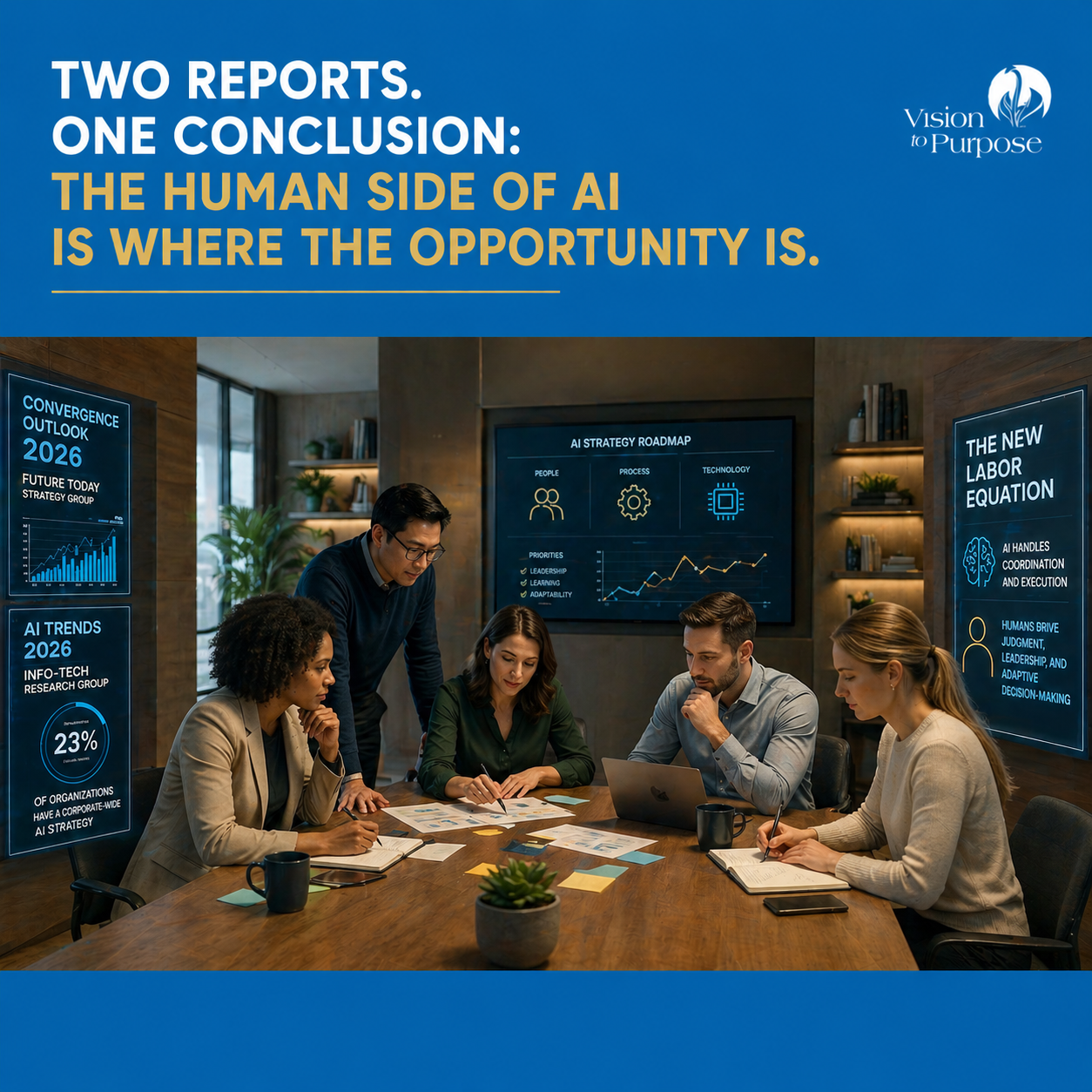
AI adoption is a workforce issue, not a technology issue. It requires the same kind of strategic thinking you’d apply to any major organizational change. Leaders, you have to address capacity, not just capability. You have to build confidence, not just competence. It also means creating space for people to adapt, not just expecting them to keep up.
The organizations that are succeeding with AI aren’t the ones with the best tools. They’re the ones who understand that implementation is a human process, and they’re designing for that reality from the start.
The Questions You Should Be Asking
If you’re leading an organization through AI adoption, here’s what matters more than your technology stack:
- Does your team understand why this matters, not just how it works?
- Are people clear on when AI makes their work better versus when it gets in the way?
- Have you created space for people to learn without the pressure of immediate performance?
- Do your middle managers know how to guide their teams through this, or are they just as uncertain as everyone else?
- Is your culture set up to reward experimentation, or does it punish mistakes?
These are workforce questions. And if you’re not answering them clearly, your AI strategy will keep underperforming no matter how much you invest in the technology.
Where This Work Actually Happens
AI strategy and workforce strategy aren’t separate workstreams. They’re the same work. If you’re building AI into your operations without thinking deeply about how people will actually use it, adopt it, and grow with it, you’re setting yourself up for expensive failure. The good news is that this is solvable. But it requires treating your people as seriously as you’re treating your tools.
Organizations will need to invest in real training, not just one-time workshops. It means building internal capacity to guide adoption, not outsourcing all the thinking to vendors. It means giving your leaders the frameworks they need to make decisions, not just the tools to execute them.
What I’m Seeing Work
The organizations making progress are doing a few things differently. They’re involving their people in the strategy early, not rolling it out as a fait accompli. They’re training for judgment and decision-making, not just tool proficiency. They’re building internal advocates who can translate AI into the language of the work people already do. And they’re treating adoption as a multi-quarter effort, not a launch event. None of this is flashy. But it’s what actually moves the work forward.
Final Thoughts

If you’re a leader trying to figure out why your AI investment isn’t delivering the results you expected, start by looking at your workforce strategy. Not your technology strategy. AI doesn’t implement itself. People do. And if your people aren’t set up to succeed with it, the rest doesn’t matter.
This is the work I’m focused on now. Helping organizations think clearly about the human side of AI adoption. Building the training, frameworks, and internal capacity that actually create change. If this resonates with where your organization is right now, I’d be interested in hearing what you’re seeing. What’s working? What’s stalling? Where are you getting stuck?
👉 Let’s Talk About Your Strategy
With purpose,

Dr. Jeannine Bennett is the founder and CEO of Vision to Purpose, where she helps professionals and organizations navigate career and business growth in the age of AI. A trusted career strategist, business consultant, and author, Jeannine specializes in helping people pivot with confidence and lead with purpose.
At Vision to Purpose, her team provides tailored career coaching, professional resume writing, author mentorship, and business consulting designed to help clients thrive in a rapidly changing world of work.
👉 Visit www.visiontopurpose.com to explore how Jeannine and her team can help you build a future-ready career or business today.